以身作則:世界童軍組織秘書長談童軍如何展現「世界應有的樣貌」而非「現狀」
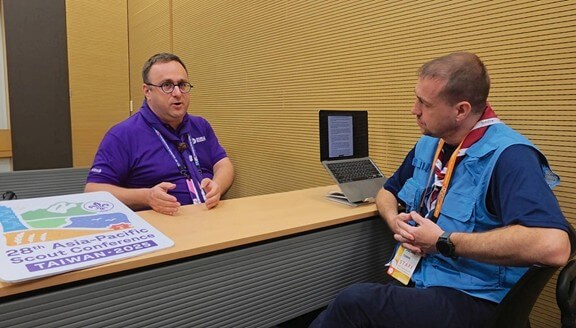
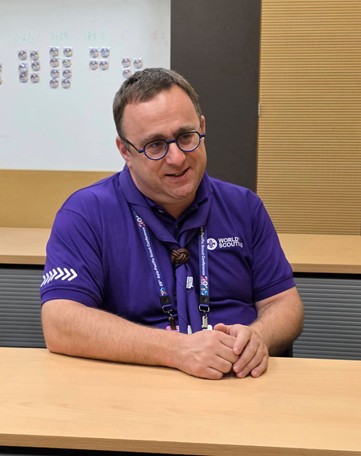
隨著第28屆亞太童軍領袖會議接近尾聲,世界童軍運動組織(WOSM)秘書長大衛・伯格(David Berg)回顧了童軍運動在快速變遷的世界中所扮演的角色。身為自七歲起便加入童軍的終身童軍,伯格談到這項運動如何在堅守「服務、安全、包容」等核心價值的同時,不斷推進其教育使命。
理想的主辦城市
伯格對高雄作為本屆大會的主辦城市表達了高度讚賞。他曾多次造訪台北,這是他首次來到高雄,他形容這座城市是「令人興奮、充滿活力的年輕城市」,也是「舉辦第28屆亞太童軍領袖會議的完美地點」。
他稱讚本次活動的組織規模與運作效率,表示:「只要看看這裡龐大的展覽攤位數量,以及每天辛勤協助活動運行的大量志工,就能看出中華民國童軍總會的強大實力。」
以混成學習推動教育革新
伯格指出,童軍運動必須不斷創新,才能對當代與未來世代保持吸引力:「我認為創新我們的教育方式至關重要。我們看到新世代的年輕人懷抱持續變革的期望。」
他觀察到,雖然許多年輕人是在數位環境中成長的,但童軍的強項仍在於真實接觸與面對面的互動機會,而非僅透過螢幕。然而,他也強調需在實體與數位體驗之間取得平衡,適度整合線上學習以補足童軍課程:「在數位世界中調整課程,讓童軍能夠在線上進行部分活動並進一步探索,這是關鍵。」
他補充說,在亞太地區,許多童軍組織設立於學校中,仰賴與教育部門及政府的合作。隨著疫情後教育體系的演變,伯格鼓勵持續倡導非正式教育的價值,強調其能補足學校的正式教育。
支持志工並肯定他們的貢獻
志工的參與始終是童軍運動可持續發展與成功的核心。伯格強調,童軍運動必須現代化其志工培訓與支持方式,讓志工的體驗更具意義與價值:「我們要確保執行童軍課程的志工能從中獲得價值;這意味著我們要重新思考訓練的方式,以及志工的整體體驗。」
他質疑傳統志工培訓的僵化制度,主張應提供更多彈性:「我們真的需要讓志工固定上幾個週末的課程嗎?能否將部分志工培訓模組改為線上進行?」
他建議引入導師制度與混成學習,作為提升可及性與留任率的有效方式。
透過靈活的學習途徑與多元的培訓模式,伯格認為童軍可以吸引並留住感到被重視與支持的志工,激勵他們持續奉獻。
「遠離傷害」:為所有人創造安全空間
伯格演講的核心之一,是童軍運動對於「遠離傷害(Safe from Harm)」倡議的承諾。
「讓每位孩童、青少年與成人在童軍中感到安全與被保護,是絕對必要的。」他強調,保障安全需要持續的成人訓練、明確的通報制度與透明的處理流程。
伯格補充說,安全不僅包括身體層面,也涵蓋數位素養與情緒韌性,因此「我們必須讓年輕人學會如何在線上保護自己」。
世界童軍組織透過政策制定、合乎規定的媒介及培訓來支持各國童軍組織:「我們也提供線上與實體的工作坊,協助他們提升能力。」
他同時指出,包容且具文化敏感度的環境同樣重要,例如設立「傾聽空間」與「安靜室」,讓所有參與者都能感到安全與尊重。
以「看見需求」達成「人人童軍」
伯格強調,多元與包容是童軍未來的關鍵:「我們希望童軍能走入每位年輕人的生活,無論他們身在何處。」
他呼籲各國童軍組織應審視自身的觸及範圍,了解尚未服務到的群體:「我們通常只知道會員的生日與居住城市,卻不了解他們的收入階層或族群背景。要了解多元性,必須先知道缺口在哪。」
一旦發現需求,課程便應調整,例如:制服設計的彈性、課程內容的修訂,或改變活動形式,以吸引更多元的族群。
「你必須願意改變課程內容。也許制服不必一成不變,或課程的設計未必能吸引某些族群。」
他補充說,與非政府組織及社區團體的合作是接觸弱勢青少年的關鍵:「童軍組織應勇於走出去,與地方慈善機構交流,問他們『我們該改變什麼?』」
透過這類合作,伯格認為童軍才能真正從「理想中的包容」邁向「實際上的包容」。
在日益分化的世界中搭起橋樑
伯格指出,童軍必須適應現代挑戰,包括人工智慧(AI)與數位教育:「我們的課程應該教授數位與AI相關技能,並教導如何負責任地使用它們。然而,童軍應始終屬於非正式教育的範疇。」
他提到像 JOTA-JOTI 這類全球性活動,吸引了數百萬童軍參與。他強調童軍的核心仍是人與人之間的真實連結:「我們的獨特價值在於親身體驗:在戶外、在一起、真誠對話。」
在愈加分化的時代,他重申童軍的團結使命:「年輕人在童軍中學到的技能,對於促進社群融合與成為和平使者至關重要。團結我們的事物遠比分化我們的多。」
展望未來:展現世界應有的樣貌,而非現狀
展望未來,伯格看到亞太地區擁有巨大潛力,這裡是世界上擁有最多年輕人口的地區之一:「這是一個龐大的成長契機,讓童軍更加多元,並持續提供課堂外、可轉化的體驗。」
他提及區域性計畫,如「生命通行證(Ticket to Life)」以及印度的成長項目,作為包容性典範,並期盼未來每位童軍都能透過線上或實體體驗國際合作。
「童軍應繼續成為凝聚人心的力量。它能展現這個世界應有的樣貌,而非現狀。」
Leading by Example
World Scouting Secretary General on How Scouting Can Show the World as It Can Be, Not as It Is
As the 28th Asia-Pacific Scout Conference draws to a close, David Berg, Secretary General of the World Organization of the Scout Movement (WOSM), reflected on Scouting’s evolving role in a rapidly changing world. A lifelong Scout since the age of seven, Berg discussed how the Movement continues to advance its mission while remaining grounded in its core values of service, safety, and inclusion.
A Perfect Host City
Berg expressed enthusiasm for Kaohsiung as the host of this year’s regional conference. Despite having visited Taipei several times, this was his first trip to Kaohsiung, which he described as “a really exciting, young city” and “a perfect place to host the 28th Asia-Pacific Regional Scout Conference.”
He praised the organization and scale of the event, remarking:
“If you just look at the enormous amount of exhibition booths, the significant involvement of volunteers who make this event happen and run on a daily basis, I think it shows the real capacity that The General Association of the Scouts of China has here.”
Evolving Education through Blended Learning
Berg noted that Scouting must adapt continuously to remain relevant for current and future generations.
“I think innovating our educational offering is absolutely key. We see new generations of young people with continuously changing expectations.”
He observed that while many of today’s youth have grown up in a digital environment, Scouting’s strength lies in offering “real contact, real direct engagement opportunities, not only through a screen.” Nonetheless, he recognized the need to balance physical and digital experiences, integrating online learning where appropriate to complement the Scouting programme.
“Adapting that to a digital world where Scouts are also able to do some of the programs online and explore further is key.”
He added that in the Asia-Pacific region, many Scout groups and clubs are based in schools and rely on collaboration with education departments and governments. As education systems evolve post-pandemic, Berg encouraged continued advocacy for the value of non-formal learning and its potential to complement formal schooling.
Supporting Volunteers and Recognizing Their Contribution
Volunteer engagement remains at the heart of Scouting’s sustainability and success. Berg stressed that the Scout Movement must modernize how it trains and supports volunteers to ensure their experience is meaningful and rewarding.
“We need to make sure that volunteers delivering the Scout program feel they get value out of that experience,” Berg explained. “That requires us to think differently about training opportunities, and what the experience is like for volunteers.”
He questioned the rigidity of traditional volunteer training models, emphasizing the need for greater flexibility:
“Do we really need to present people with a set number of weekends of training? Can we do parts of those volunteer training modules online, for example?” He further proposed mentoring and hybrid learning as effective ways to enhance accessibility and retention.
Through adaptive learning pathways and diversified training formats, Berg argued that Scouting can attract and sustain dedicated volunteers who feel valued, supported, and inspired.
Safe from Harm: Creating Safe Spaces for All
A central message in Berg’s remarks was the Scout Movement’s commitment to safeguarding through its Safe from Harm initiative.
“It’s absolutely essential that every child, every young person, every adult feels safe and secure in Scouting,” he stated, stressing that protection and well-being are collective responsibilities.
He explained that ensuring safety requires consistent adult training, clear reporting systems, and transparent escalation procedures.
Safeguarding, Berg added, extends beyond physical safety to include digital literacy and emotional resilience, in which we need to “give young people the skills to be safe online.”
He outlined how World Scouting supports this through safeguarding policy development, compliance tools, and training available to National Scout Organizations. “We also offer workshops, both in person and online, for them to strengthen their capacity.”
He also recognized the need for inclusive and culturally sensitive environments, noting that spaces like “listening ears and quiet rooms” help ensure all participants feel safe and respected.
Reaching Every Young Person by Identifying the Gaps
Berg asserted that diversity and inclusion are central to Scouting’s future. “We want Scouting to be there for every young person, everywhere.”
He urged National Scout Organizations to examine who is being reached and who is not. We often lack a full understanding of our membership’s diversity.
“We usually know their birthdays and the cities where they live, but we have no idea about income groups or ethnicity. Those are elements to think of to first understand diversity, where are the gaps?”
Once these gaps are identified, programs should adapt — through uniform flexibility, curriculum revision, or alternative delivery — to appeal beyond mainstream audiences.
“You must be willing to change the program,” he said. “Maybe a uniform isn’t as straightforward, or maybe the program offering doesn’t speak to a particular ethnicity.”
He added that partnerships with non-governmental organizations and community organizations are vital to reaching marginalized youth. “Scout organizations should dare to open up and approach local charities... and ask them, ‘What should we change?’”
Through such collaboration, Berg suggested, Scouting can move beyond aspiration to genuine inclusivity.
Building Bridges in an Increasingly Polarized World
Berg reflected on how Scouting must adapt to modern challenges, including artificial intelligence (AI) and digital education. “Our program must offer skills around digital and AI, and how to use those responsibly. But Scouting should remain non-formal education.”
He referenced global initiatives and events like JOTA-JOTI, which engage millions of Scouts worldwide. Yet he underscored Scouting’s enduring human connection: “Our unique value proposition is being outside, being together, real dialogue, real discussions with each other.”
In an era of growing polarization, he reiterated Scouting’s role as a unifying force: “The skills young people learn in Scouting are essential to bridge communities and be peacemakers. There’s more that unites us than what sets us apart.”
A Vision for the Future: “To Show the World as It Could Be, Not as It Is”
Looking ahead, Berg sees immense opportunity in the Asia-Pacific region, home to one of the world’s largest youth populations.
“There’s an enormous opportunity for growth and to make Scouting more diverse and continue to provide transformational experiences outside the classroom.”
He cited regional initiatives, such as Ticket to Life and growth projects in India, as models of inclusion, expressing the ambition that every Scout will one day experience international collaboration, either in person or online.
“Scouting should remain that uniting factor ... it can show the world as it could be, not as it is.”